Caring for a Metal Gate Through the Texas Year
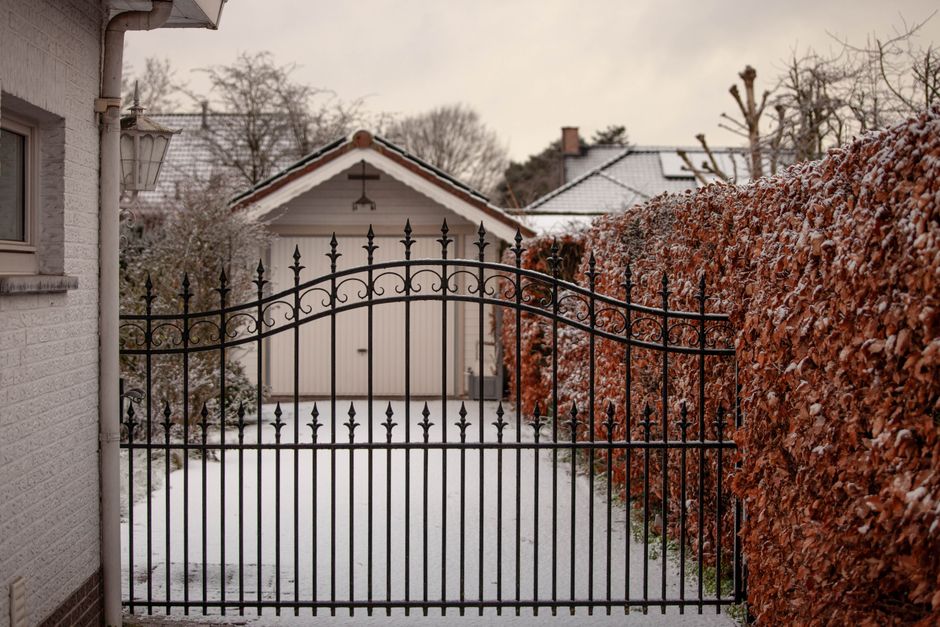
A metal gate in Georgetown, TX stays in good shape on about four short checks a year, one for each change in the weather. The gate does not wear out quickly, but the ground under its posts and the finish on its steel are always reacting to heat, rain and dry spells, and a small problem found in a ten minute walk-around costs a fraction of one found after the gate has dragged a groove in the drive.
What should be checked in spring?
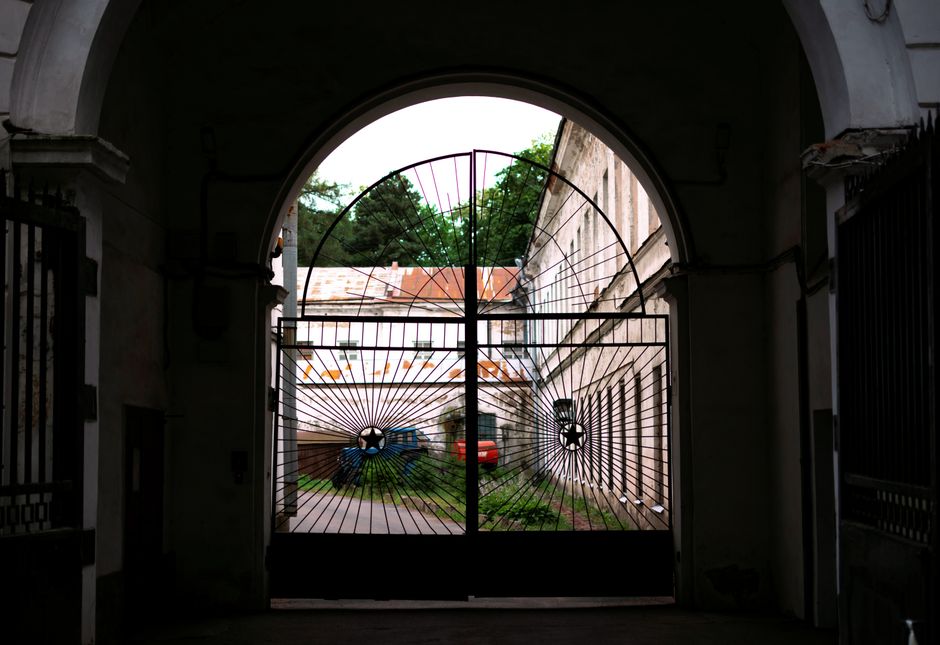
Spring is the time to check the posts and the hinges after the wet season. Clay in Williamson County is at its most swollen in spring, and posts that moved over winter show up as a latch that no longer lines up or a leaf that scrapes at the free end. A level on the hinge post tells in a few seconds whether it has shifted.
Open the gate slowly and watch the free end for any rise or drop along the swing. Note where the bottom rail clears the ground at the latch, at the middle and at the hinge. Those three numbers are the baseline, and a change of more than half an inch from the year before is worth acting on.
What does summer heat do to a gate?

Summer heat expands steel, tightens the clearances and bakes the grease out of the hinges. A long leaf can grow enough in a hot afternoon to bind against its stop or its latch, and a gate that closes fine in the morning can stick at four o'clock. The gap at the latch is left generous for that reason.
The finish takes the worst of the sun. Dark colors on powder coat reach very high surface temperatures, and a gate in full sun fades faster than one in shade. A wash with mild soap and a soft brush removes the dust and pollen that hold moisture against the surface. Pins and latch mechanisms get fresh grease before the hottest weeks.
What should be checked in fall?
Fall is the time to look for finish damage before the wet months come back. Walk the gate with a flashlight held low and check every weld, the bottom of each picket and the lower rail, where water collects and rust starts. Any chip that shows bare metal is cleaned with a wire brush and touched up with a zinc-rich primer and a matching topcoat.
Check the drop rod sleeve and the track of a slide gate for leaves and grit. Debris packs in during autumn and turns to a hard plug when it rains. Clear it by hand or with a small scraper, then run the gate through a full cycle.
Does winter need any attention?
Winter needs the least attention, but a cold snap can freeze water inside open tubing and split a seam, and wet leaves stack against the bottom rail. Make sure any open ends are capped and that drain holes at the bottom of posts are clear. After a freeze, look at the welds and at the base of each post for fresh cracks in the finish.
How do storms and wind change the routine?
Storms and wind load a gate sideways, and a solid or privacy-style leaf catches far more wind than an open picket gate. After a big blow, check that the drop rod is still seated, that the stops have not bent and that the latch has not been forced out of line. A leaf left open in a gust can slam against its stop and crack a weld at the hinge side.
Hail and falling limbs chip the finish, and the damage is small but easy to miss. Look along the top rail and the face that points toward the weather, since that is where most strikes land. Wet weather after a chip is what turns a small mark into a rust streak, so touch-up paint goes on as soon as the surface is dry.
How does daily use change the wear?
Daily use wears the parts that move, and a gate that is opened ten times a day wears its hinges and latch much faster than one opened twice a week. Gates near Interstate 35 or on busy streets pick up road dust that grinds into pins and tracks. Wiping the exposed pins and greasing them more often keeps that grit from cutting into the metal.
Children and delivery trucks are the other source of wear. A gate that is swung hard against its stop or pulled open by the top rail develops a bend in the frame over time. A rubber bumper on the stop and a handle in the right place both help.
Frequently asked questions
How often should the hinges be greased?
Hinges should be greased twice a year, in spring and early fall. Ball-bearing and barrel hinges with a grease fitting take a few pumps of a grease gun, and plain pin hinges take a thin film of grease wiped on the pin. A hinge that squeaks is already dry.
Why does the gate rub the ground in wet weather only?
A gate rubs in wet weather because the clay under the posts swells and lifts or tilts them. The leaf has not changed, but its hinge post has moved, so the free end drops. It usually recovers a little when the ground dries. If it does not, the footing needs to be reset or the leaf braced.
Can a rusted gate be saved?
A gate with surface rust can be saved by removing the rust to bright metal, priming with a zinc-rich primer and repainting. Rust that has eaten through the wall of the tubing needs the section cut out and replaced with new steel, then welded and finished. Rust is easiest to stop at the first orange spot.
Does a gate need a different footing near Lake Georgetown?
A gate near Lake Georgetown or the San Gabriel River often does, because ground close to water stays wetter and softer. A wider footing with gravel at the bottom of the hole drains better, and a crowned top sheds water away from the post. Posts there are best galvanized or primed inside as well as out.
Is it worth adding an operator to an older gate?
An operator can go on an older gate if the leaf swings freely by hand, the posts are plumb and the hinges are sound. The motor pushes the leaf harder than a person does, so any drag or sag has to be repaired first. A leaf that takes more than a light push to move is not ready for one.
How can a crew tell if a post footing has failed?
A failed footing shows as a post that moves when pushed by hand, a crack in the concrete at ground level or a gap between concrete and soil. The post is pushed at the top while a second person watches the base. Any visible rocking at ground level means the footing is not holding.
What can be done between visits?
A homeowner can wash the gate, clear debris from the track and sleeve, and watch the clearance at the free end. Photographs taken from the same spot each season make a slow change easy to see. Anything that involves welding, resetting a post or adjusting an operator is a job for a trained crew.
What is the best habit?
The best habit is to open and close the gate slowly once a month and listen. Squeaks, scrapes and clicks show up long before the gate fails.